
Red Light Therapy and Longevity — A Practical Primer
Red light therapy sits in the same conversation as other longevity modalities: interesting, increasingly common, and easy to oversell. Understand what it is, keep foundations first, and treat devices as optional support.
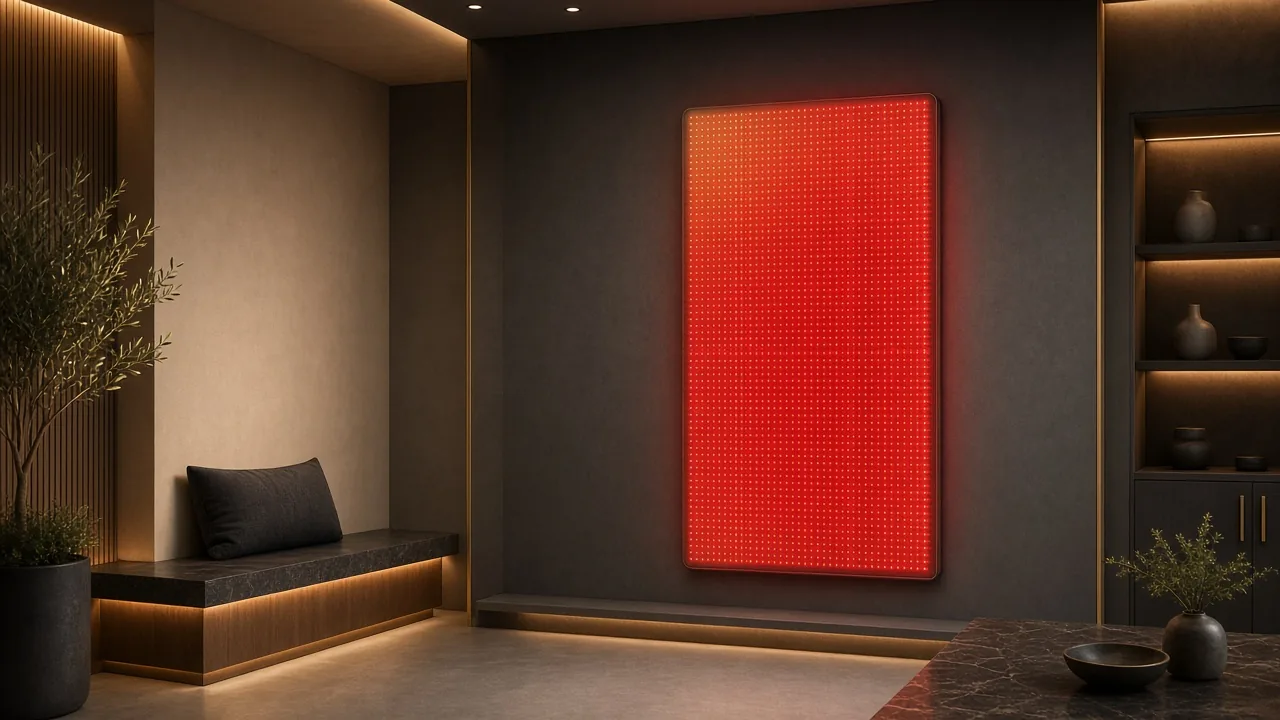
Red light therapy sits in the same conversation as other longevity modalities: interesting, increasingly common, and easy to oversell. A useful approach is simple — understand what it is, keep sleep and recovery fundamentals first, and treat devices or clinic sessions as optional support, not the whole plan.
At Marquis Longevity Company, we educate first. Sleep, Stress, Movement, Nourishment, and Connection remain the Pillars. Photobiomodulation (the research term often used for red and near-infrared light) is optional context — not a cure-all. This primer is educational wellness, not a personal treatment plan. Individual results vary.
What red light therapy actually is
In plain language, red light therapy usually means exposing skin to specific wavelengths of visible red light and/or near-infrared light from LEDs or similar sources for short sessions. Researchers study how light energy interacts with cells (sometimes called photobiomodulation). Consumer panels, masks, and clinic beds package that idea into timed sessions.
What it is not: a substitute for sleep timing, protein and walking, or clinician care when you need it. Marketing language can outrun evidence. A calm stance is: curiosity yes, guaranteed anti-aging or disease claims no.
Why people explore it
Adults often ask about red light for recovery after training, skin appearance, joint comfort curiosity, or a general “wellness stack” feel. Some of that interest is reasonable; some is hype. Separate three layers:
- What you are hoping to feel (less next-day stiffness, a recovery ritual, skin care curiosity).
- What a device or clinic can honestly claim (often limited; read labels carefully).
- What still matters more — consistent Sleep, Stress skills, Movement, and Nourishment.
If a panel becomes a nightly ritual that replaces doomscrolling, that behavioral win may matter as much as any wavelength story. If it crowds out sleep or becomes expensive without a clear experiment, pause.
Practical tips if you try it
Keep expectations modest and the experiment clean:
- Define one outcome for 2–4 weeks (e.g., “do I feel a calmer wind-down?”), not ten outcomes at once.
- Follow manufacturer eye and skin guidance. Do not stare into bright LEDs. Use eye protection when instructed.
- Start with the product’s suggested session length rather than “more is better.” Longer is not automatically smarter.
- Place it after basics. If you are sleeping 5 hours, fix light-at-morning and wind-down first.
- Track simply: date, minutes, and one 0–10 note on how you feel the next day.
- Skip disease-treatment framing on a marketing site — and in your own notebook. Escalate medical concerns to a clinician.
Shop/Supports may later curate non-Rx tools; that is separate from Care (clinician-gated Rx pathways).
Safety and who should skip or ask first
Talk with a qualified clinician before use if you have photosensitivity, take medications that increase light sensitivity, have active skin disease in the treatment area, history of skin cancer concerns, eye disease, or are pregnant. Stop if you develop unusual pain, burns, vision changes, or rash. Children and unsupervised use are outside this primer’s scope.
This is not medical advice. Devices are not emergency care — call 911 for emergencies.
How it fits Marquis stepped care
Learn (free): primers like this — useful education, not paywalled teasers. Assessment + Paths: map your Pillars; build habits. Membership: personalization and deeper follow-through when you want ongoing structure. Care / Heally (coming soon): clinician-gated conversations (including GLP-1s and peptides when appropriate) — never a DIY peptide shop on this site. Supports / Shop (coming soon): optional non-Rx tools later, clearly labeled.
Natural-first means foundations outrank gadgets. Elevate your Health by protecting Sleep and Stress recovery; let red light stay optional.
A one-week evaluation checklist
Before you buy a panel or book a package, spend one week clarifying the job you want the tool to do:
- Write a single sentence: “I am testing red light to support ___.”
- Protect Sleep basics on the same days (morning outdoor light, caffeine cutoff, wind-down).
- If you already own a device, run the manufacturer’s default session 3–5 evenings and log energy/sleep the next morning.
- Compare cost and time against a walk, strength session, or earlier bedtime — modalities should not outbid fundamentals.
- Decide continue / pause / ask a clinician — not “subscribe forever by default.”
This checklist keeps red light in the optional lane where it belongs.
Sources & further reading
These links are for education. Studies vary in design and strength. Individual results differ. This is not medical advice — talk with your clinician before starting a modality, especially with heart, blood pressure, pregnancy, or medication concerns.
Soft next steps
- Take the free educational Longevity Assessment to see where to start among the Pillars: Assessment
- Share founding Membership interest if you want deeper personalization and follow-through: Membership
- Telehealth is coming soon: Care (soon)
Elevate your Health — foundations first, modalities as optional support.
— Marquis Longevity Company
Educational wellness information only — not medical advice, diagnosis, or a personal treatment plan. Individual results vary. This is not emergency care — call 911 for emergencies. If you have medical conditions, take prescription medications, are pregnant, or have questions about whether a modality is appropriate for you, talk with a qualified clinician before starting.
Keep going with Sleep
Start with the free Assessment to see how Sleep ranks among your Pillars, or explore related Learn articles from the hub.
Use the assessment and focus areas to build a clearer picture of what you want to improve.
Clinician care through our telehealth partner is coming. Membership interest is open now.
Content is educational and not medical advice. When Telehealth opens, care decisions will rest with licensed clinicians.
A measured next step
This article is educational wellness, not a personal treatment plan. Begin with habits above, then use Assessment or Membership interest if you want ongoing structure.
Educational information only, not emergency care. If you are experiencing an emergency, call 911.